
Dancing Dryads
by 1879
Medium
Painting
Classification
Painting
Department
Smithsonian Collection
Museum
Smithsonian American Art Museum
Credit
Smithsonian American Art Museum, Gift of John Gellatly
Accession Number
1929.6.93
Rights
Public Domain
Tags
About this artwork
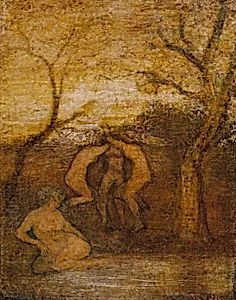
Many American painters in the nineteenth century painted nature as a classical world of dryads, nymphs, and other imaginary creatures. Albert Pinkham Ryder was inspired by a painting by Jean-Baptiste Camille Corot that shows dancing figures in an atmospheric, intimate landscape. In Dancing Dryads, Ryder added many layers of paint and glaze to create a thick, enamel-like surface that emphasized the glowing colors and dreamlike scene. Over time, however, the colors faded and an early restorer actu...
Art Historical Context
In the late 19th century, artists like Albert Pinkham Ryder often transformed nature into a mythical realm inhabited by dryads, nymphs, and other classical figures, blending Romanticism with imaginative reverie. *Dancing Dryads*, completed by 1879, exemplifies this trend. Ryder, a visionary painter known for his poetic, atmospheric landscapes, drew direct inspiration from Jean-Baptiste Camille Corot's enchanting scene of dancing figures in a misty, intimate woodland. His canvas evokes a dreamlike world where ethereal tree spirits whirl amid glowing foliage, capturing the era's fascination with nature's hidden magic. Ryder's technique was revolutionary: he built up countless layers of paint and glaze, creating a thick, enamel-like surface that amplified the luminous colors and otherworldly glow. This impasto method not only heightened the painting's tactile depth but also infused it with a sense of timeless enchantment. Tags like "tree," "dryad," and "dance" highlight its core motifs, rooted in classical mythology. Over time, the vibrant hues faded, prompting an early restorer to add defining outlines around the figures to keep them from blending into the background—a testament to the artwork's fragility and enduring allure. Today, *Dancing Dryads* graces the Smithsonian American Art Museum, a gift from John Gellatly, inviting visitors to ponder Ryder's bridge between reality and myth.
About the Artist
Albert Pinkham Ryder · 1847–1917
Largely self-taught, Albert Pinkham Ryder is widely considered one of America's greatest visionary painters. His intense use of color and mysterious themes are distinctly Romantic. Ryder moved with his family from New Bedford, Massachusetts to New York in 187, where he studied briefly at the New York National Academy of Design. He studied the engravings of Camille Corot and other Barbizon painters...