
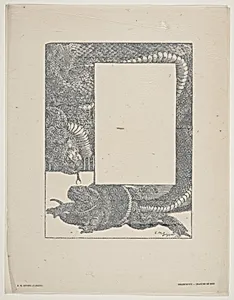
Das Mappenwerk der Insel
Medium
woodcut
Dimensions
image: 24 × 18 cm (9 7/16 × 7 1/16 in.) sheet: 35.2 × 27.5 cm (13 7/8 × 10 13/16 in.)
Classification
Portfolio
Department
CG-W
Museum
National Gallery of Art, Washington, D.C.
Credit
Virginia and Ira Jackson Collection
Accession Number
2005.157.7.8
Rights
Public Domain
Art Historical Context
**Das Mappenwerk der** is a striking woodcut created by German artist Ernst Moritz Gey in 1900, part of a portfolio (Mappenwerk) evocatively titled "The Island Portfolio." Measuring 24 × 18 cm on a larger 35.2 × 27.5 cm sheet, this print exemplifies the intimate scale of fine art printmaking at the fin-de-siècle, designed for collectors and connoisseurs. Housed in the National Gallery Art's Virginia and Ira Collection (Department CG-W), it invites viewers into Geyger's imaginative world, possibly drawing on themes of isolation or idyllic escapes amid Europe's cultural ferment. Woodcuts, like this one, hold a revered place in artistic history for their direct, tactile process: Geyger would have carved intricate designs into wooden blocks, inking the raised surfaces to produce bold contrasts and rich textures unachievable in other media. At the dawn of the 20th century, this technique saw a revival among artists embracing graphic clarity and expressiveness, bridging traditional craftsmanship with modern sensibilities. Geyger, known for his multifaceted practice in sculpture and prints, contributed to this era's emphasis on decorative arts and narrative depth. As a portfolio piece, **Das Mappenwerk der Insel** reflects the period's fascination with print series, allowing affordable dissemination of visionary ideas. Its survival in a prestigious collection underscores its enduring appeal, offering museum visitors a window into turn-of-the-century creativity and the artistry of the woodcut medium. (198 words)
About the Artist
Ernst Moritz Geyger · 1861–1941
Ernst Moritz Geyger (1861–1941) was born on November 9, 1861, in Rixdorf (now Berlin-Neukölln), into a family rooted in education; his father, Gustav Ernst Geyger, served as rector of a Berlin community school, and his mother was Albertina Lisetta Ida Brückner, with siblings including Elfriede, known as Lisa. At age sixteen, he began training in the painting class at Berlin's Art School in 1877, t...