
David Wiley
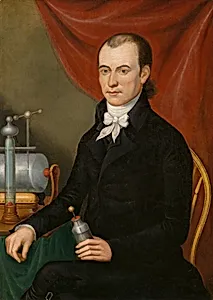
Medium
Painting
Classification
Painting
Department
Smithsonian Collection
Museum
Smithsonian American Art Museum
Credit
National Portrait Gallery, Smithsonian Institution
Accession Number
NPG.87.244
Rights
Public Domain
Tags
About this artwork
(Schwarz Gallery, Philadelphia); purchased 1987 NPG
Art Historical Context
**David Wiley** (c. 1801) is a compelling portrait by Charles Peale Polk (1767–1822), member of the esteemed Peale family of early artists. Captured around the turn of the th century, this painting David Wiley, a multifaceted figure symbolized through tags like librarian, teacher merchant, minister, and surveyor. Seated with a drape and chair, he holds a journal and is by scientific apparatus, evoking the Enlightenment-era ideal of the Renaissance man—blending intellect, faith, commerce, and exploration post-Revolutionary America. Pol, nephew of portraitist Charles Willson Pe, worked in a folk portrait style characterized by direct gazes, symbolic props, and straightforward compositions. This oil painting highlights Wiley's diverse roles, using everyday objects to convey status and accomplishment, a common technique in early federal-era portraits that celebrated individual merit amid national growth. Acquired by the National Portrait Gallery in 1987 from the Schwarz Gallery in Philadelphia, the work resides in the Smithsonian American Art Museum. It offers a window into the aspirations of early American professionals, underscoring how portraiture immortalized personal achievements during a time of scientific curiosity and territorial expansion. (198 words)