
De kruisafneming
ca. 1640 - ca. 1650
Medium
oil on canvas
Dimensions
308; 3.5; 11; 232.5; 223; 317.5
Rights
Public Domain
About this artwork
support: height 308 cm x width 223 cm x thickness 3.5 cm
Art Historical Context
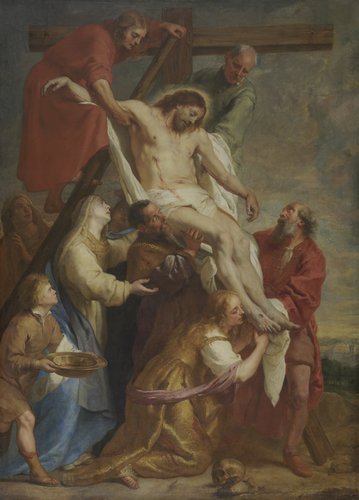
Gaspar de Crayer's *De kruisafneming* (The Descent from Cross), painted around 1640–1650, captures one of the most poignant moments in the Passion of Christ the careful lowering of Jesus' body from the cross by his followers. This monumental oil on canvas, measuring an imposing 308 cm high by 223 cm wide, the grandeur of Flemish Baroque art. De Crayer, a Antwerp painter influenced by masters like Peter Paul Rubens, specialized in large-scale religious scenes that stirred deep emotional responses, perfectly suited for church altarpieces during the Counter-Reformation era. The choice of oil on canvas allowed De Crayer to achieve luminous colors, dramatic chiaroscuro lighting, and lifelike textures—hallmarks of the Baroque style that emphasized theatricality and human emotion to inspire faith. Created amid Flanders' vibrant 17th-century art scene, the work reflects the era's Catholic revival, where such depictions reinforced devotion and communal piety. Its vast scale underscores its likely role in a sacred space, immersing viewers in sorrowful reverence. Today, housed in the Rijksmuseum, *De kruisafneming* stands as a testament to De Crayer's mastery and the enduring cultural power of religious iconography. Visitors are drawn into its intimate tragedy, reminding us of art's ability to bridge the divine and the human across centuries.