
BK-18794-B
1800 - 1900
Medium
clay
Dimensions
5.3; 19; 9
Rights
Public Domain
About this artwork
hoogte 19 cm x breedte 9 cm x diepte 5,3 cm
Art Historical Context
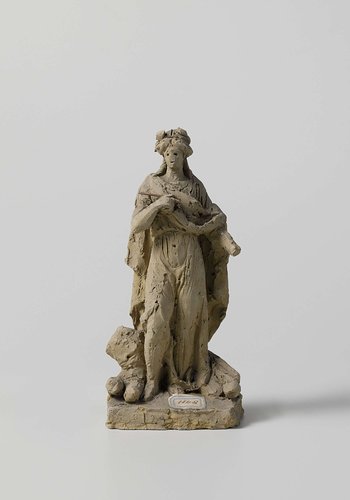
This small-scale clay sculpture, created by Eugène Lacomblé between 1800 and 1900, measures just 19 cm in height. Catalogued as BK-18794-B, the piece reflects the intimate character of many 19th-century clay works, which were often modelled by hand rather than cast. The compact dimensions suggest it may have served as a study, decorative object, or personal keepsake rather than a monumental commission. Clay’s pliability allowed artists of the period to capture spontaneous gestures and fine surface textures with relative speed. Lacomblé’s choice of this humble medium aligns with a broader 19th-century interest in terracotta and unfired clay for exploring form and expression before committing ideas to more permanent materials such as marble or bronze. Now preserved in a museum collection, the sculpture offers visitors a tangible connection to the tactile working methods of the era. Its modest size encourages close looking, revealing the subtle fingerprints and tool marks that speak to the artist’s direct engagement with the material.
About the Artist
Eugène Lacomblé · 1828–1905
Eugène Lacomblé (1828–1905) was a versatile Belgian artist who worked primarily as a sculptor but also practiced painting, watercolor, drawing, and etching, embodying the nineteenth-century ideal of the multi-talented artist-craftsman. Born in Brussels and dying in Arnhem, Lacomblé's career spanned the second half of the nineteenth century, a period of significant artistic and social change in Eur...