
4/8
1695 - 1704
Medium
engraving
Dimensions
251; 178
Rights
Public Domain
About this artwork
plaatrand: hoogte 251 mm x breedte 178 mm
Art Historical Context
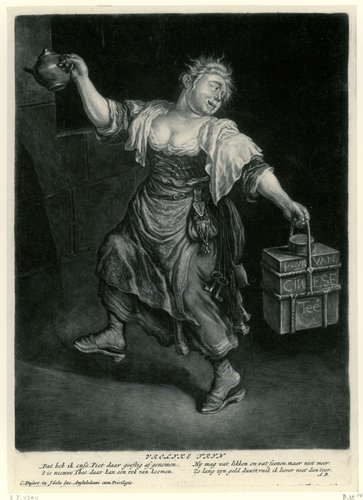
Cornelis Dusart's *4/8*, created between 1695 and 1704, is a fine example of Dutch engraving from the waning years of the Golden Age. As a skilled printmaker and painter trained under Adriaen van Ost, Dusart specialized in lively genre scenes depicting everyday rural life, often with a touch of humor or caricature. This work, measuring 251 mm high by 178 mm wide (matching the plate's precise dimensions), likely forms part of a numbered series, suggesting it was designed for collectors who prized such cohesive sets. Engraving, Dusart's chosen medium, involved incising intricate lines into a copper plate with a burin, then inking and printing to produce rich, detailed impressions. This technique allowed for exceptional tonal depth and texture, making engravings highly valued as affordable art reproductions that brought masterful compositions into homes across Europe. Dusart's prints, in particular, captured the vibrancy of peasant customs and social types, reflecting the era's fascination with the Dutch countryside. Today, *4/8* offers a window into late 17th-century print culture, where technical precision met artistic storytelling. Its modest scale invites close inspection, revealing Dusart's masterful linework and enduring appeal to connoisseurs of Baroque-era graphics.
About the Artist
Cornelis Dusart · 1660–1704
Cornelis Dusart (1660–1704) was a Dutch painter, draughtsman, and printmaker who stands as one of the most important continuators of the peasant genre tradition established by Adriaen van Ostade in Haarlem. Born in Haarlem, Dusart entered Van Ostade's workshop as a pupil and assistant, a relationship that proved formative in every respect. He so thoroughly absorbed his master's approach — the depi...