
De verloren zoon bij de hoeren
1658 - 1677
Medium
paper
Dimensions
396; 332
Rights
Public Domain
About this artwork
height 332 mm x width 396 mm
Art Historical Context
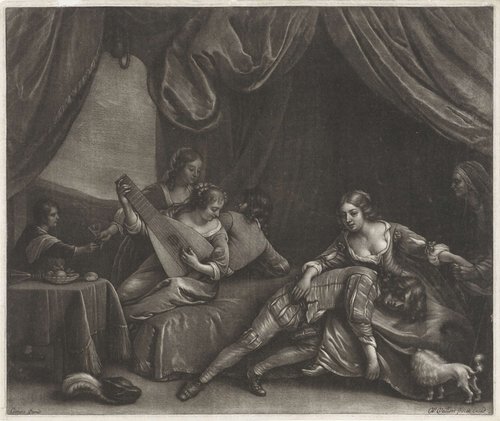
**De verloren zoon bij de hoeren** (The Prodigal Son the Harlots), created by Dutch artist Wallerant Vaillant between 1658 and1677, draws from the biblical Parable of the Prodig Son in Luke 15. This poignant scene captures the wayward youth squandering his inheritance in riotous living, surrounded by revelers—a stark visual sermon on folly, repentance, and redemption popular in 17th-century Northern Europe. Vaillant, a Baroque-era master from Lille active in the Dutch Republic, used such moralistic themes to engage viewers in an age of religious fervor and artistic innovation. Rendered on paper (332 mm high by 396 mm wide), this work showcases Vaillant's pioneering mezzotint technique, which he invented around 1658. Unlike traditional engravings' sharp lines, mezzotint's roughened copper plate yields velvety tones and dramatic chiaroscuro, mimicking oil painting's depth on a more accessible medium. This innovation democratized fine art, allowing prints to reach wider audiences beyond elite collectors. As a cultural artifact, it reflects the Dutch Golden Age's blend of piety and realism, reminding visitors of art's role in everyday moral instruction. Vaillant's legacy endures in printmaking history, making this intimate sheet a window into 17th-century life's spiritual and technical brilliance.
About the Artist
Wallerant Vaillant · 1623–1677
Wallerant Vaillant (1623-1677) was a French-born Dutch Golden Age painter and printmaker who pioneered the mezzotint technique in printmaking. Born in Lille on May 30, 1623, he died in Amsterdam on August 28, 1677, leaving behind a significant legacy as both a portraitist and innovator in graphic arts. Vaillant holds a distinguished place in art history as one of the first professional artists to...