
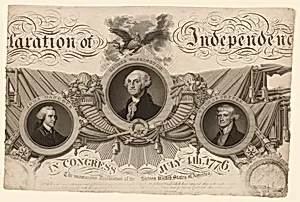
Declaration of Independence
Medium
Classification
Department
Smithsonian Collection
Museum
Smithsonian American Art Museum
Credit
National Portrait Gallery, Smithsonian Institution
Accession Number
S/NPG.79.64.A
Rights
Public Domain
Tags
Art Historical Context
James Barton Longacre's *Declaration of Independence* (c. 1818) is a striking print that captures the spirit of America's founding moment. Created by the renowned engraver and portraitist Longacre, who later became chief engraver of the U. Mint, this work depicts key figures from the Revolutionary era, including George Washington as a general and surveyor, John Hancock as a Massachusetts statesman and signer, and Thomas as a Virginia inventor, secretary of state, and Declaration signer. Surrounding them are symbolic elements like an eagle wreath, cornucopia, and sword, evoking national pride and abundance. As a print from the Smithsonian American Art Museum's collection, it reflects early 19th-century techniques in engraving, where intricate details brought historical scenes to life for a wide audience. Produced decades after the 1776 signing, it served as patriotic imagery during a time of growing American identity, honoring the signers' diverse roles—from farmers and lawyers to architects and merchants. This artwork's cultural importance lies in its role as visual history, making the Revolution accessible and reverent. Visitors will appreciate how Longacre's precise lines immortalize these colonial statesmen, blending portraiture with allegory to inspire reflection on liberty's enduring legacy.