
Decorative Element
Unknown Artist
9th–10th century
Medium
Rock crystal; carved
Dimensions
H. 3 in. (7.6 cm) DIam. 5/16 in. (0.8 cm)
Classification
Stone
Department
Islamic Art
Museum
Metropolitan Museum of Art, New York, NY
Credit
Gift of J. Pierpont Morgan, 1917
Accession Number
17.190.522a
Rights
Public Domain
Art Historical Context
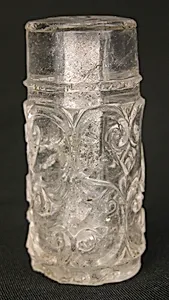
This exquisite *Decorative Element*, carved from rock crystal in the 9th–10th century, exemplifies the masterful craftsmanship of Islamic artisans during the Islamic Golden Age. Standing just 3 inches (7.6 cm) tall with a slender diameter of 5/16 inch (0.8 cm), its delicate form suggests it may have adorned jewelry, furniture, or architectural features, showcasing the period's fascination with luxury materials. Rock crystal, a clear and exceptionally hard variety of quartz, was prized for its translucency durability, making it ideal for intricate carvings that caught and refracted light. In the Islamic world, particularly under Abbasid and early Fatimid patronage, rock crystal carving reached new heights of technical sophistication. Artisans employed fine drills, abrasives, and polishing techniques to create precise, faceted surfaces, blending influences from Byzantine, Sassanian, and classical traditions. These objects were symbols of wealth and refinement, often produced in workshops in Iraq, Egypt, or Syria, and traded across empires. Today, this piece graces the Metropolitan Museum of Art's Islamic Art department, a gift from J. Pierpont Morgan in 1917. It invites visitors to marvel at the anonymous artist's skill, a testament to how everyday decorative arts embodied profound cultural and artistic innovation.