
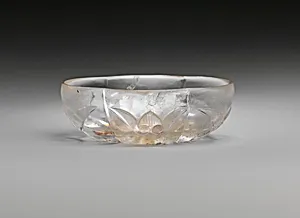
Small Lobed Bowl
Unknown Artist
9th–10th century
Medium
Rock crystal; carved, relief-cut
Dimensions
H. 5 in. (12.7 cm) D. 10 in. (25.4 cm)
Classification
Stone
Department
Islamic Art
Museum
Metropolitan Museum of Art, New York, NY
Credit
Purchase, Friends of Islamic Art Gifts, 2007
Accession Number
2007.343
Rights
Public Domain
Art Historical Context
This exquisite Small Lobed Bowl, from rock crystal in the 9–10th century, the pinnacle of Islamic artistry during the medieval period. Carved using the demanding relief-cut technique—where intricate designs are incised into the hard, translucent quartz—the bowl features a lobed, scalloped rim that evokes the organic forms of lotus petals or pomegranates, common motifs in Islamic decorative arts. Measuring 5 inches high and inches in diameter, its generous size suggests it was a luxury item, perhaps used for displaying fruit, confections, or as a ceremonial vessel in elite households. Rock crystal, prized for its clarity and luster resembling ice or water, was a favored medium in the Islamic world, particularly in centers like Baghdad or Cairo, where workshops produced such rarities for caliphs and nobles. The relief carving demanded exceptional skill, as the material's brittleness risked shattering under the chisel, highlighting the anonymous artisan's mastery. This bowl reflects the era's fusion of technical innovation and aesthetic refinement, bridging metalwork traditions with stone sculpture. Today, on view in the Metropolitan Museum of Art's Islamic Art department—acquired through the Friends of Islamic Art in 2007—it invites visitors to marvel at the enduring sparkle of medieval ingenuity, a testament to a golden age of craftsmanship.