
Demi-John Pottery
c. 1937
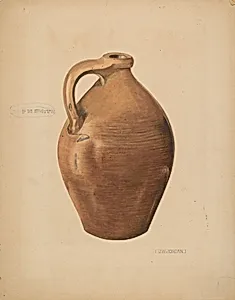
Medium
watercolor, colored pencil, and graphite on paperboard
Dimensions
overall: 35.6 x 28 cm (14 x 11 in.) Original IAD Object: 16 3/4" High 10 3/4" Wide(max) 2 3/4" Dia.(mouth) 1 3/8" Hndl 6" Diameter (base)
Classification
Index of American Design
Department
CG-W
Museum
National Gallery of Art, Washington, D.C.
Credit
Index of American Design
Accession Number
1943.8.6226
Rights
Public Domain
Art Historical Context
**Demi-John Pottery** John Jordan (c. 1937) is a captivating watercolor, colored pencil, and graphite on paperboard, measuring 35.6 x 28 cm. This precise depiction captures a traditional American demi-john—a large earthen jug encased in woven wicker, ideal for storing wine, oil, or spirits. The original object's dimensions (16 3/4 inches high, with a 6-inch base diameter and 2 3/4-inch mouth) highlight its sturdy, functional design, evoking everyday folk craftsmanship from America's past. Created as part of the Index of American Design (IAD), a Works Progress Administration (WPA) project during the Great Depression, Jordan's work preserves vanishing examples of American decorative arts. Launched in 1935, the IAD employed artists to document regional folk objects through detailed, colorful plates, ensuring cultural heritage endured economic hardship. Jordan's mixed-media technique—vibrant watercolors for form and texture, graphite for fine lines, and colored pencil for subtle shading—brilliantly conveys the pottery's glazed surface and wicker weave, blending artistry with documentary accuracy. Housed in the National Gallery of Art's IAD collection, this piece celebrates utilitarian beauty in American pottery traditions, reminding us how ordinary vessels shaped daily life and regional identity. A testament to New Deal creativity, it invites you to appreciate the quiet elegance of folk design.