
Stoneware Jug
c. 1940
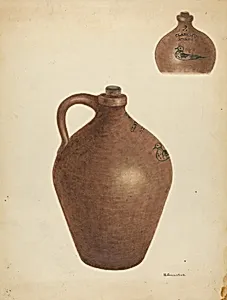
Medium
watercolor and graphite on paperboard
Dimensions
overall: 30.3 x 22.8 cm (11 15/16 x 9 in.)
Classification
Index of American Design
Department
CG-W
Museum
National Gallery of Art, Washington, D.C.
Credit
Index of American Design
Accession Number
1943.8.17446
Rights
Public Domain
Art Historical Context
Behold the *Stoneware Jug*, a meticulous watercolor and graphite rendering on paperboard by Nicholas Amantea, created around 1940. Measuring 30.3 x 22.8 cm, this intimate study captures the humble beauty of a traditional American pottery vessel, its earthy form and subtle glazes rendered with precision to highlight everyday craftsmanship. This artwork is a gem from the Index of American Design, a landmark WPA Federal Art Project (1935–1942) that employed artists during the Great Depression to document America's folk art and design heritage. Amantea, one of over 400 contributors, used watercolor for vibrant tonal effects and graphite for fine details, creating a faithful record that preserved vanishing traditions amid industrialization. Housed in the National Gallery of Art's CG-W Department, it celebrates stoneware's cultural role—from utilitarian farm jugs to symbols of regional ingenuity. Such pieces remind us how ordinary objects embody American identity, bridging art and history for future generations.
About the Artist
Nicholas Amantea · 1900–1978
Nicholas Amantea (1900–1978) was an American artist born on July 13, 1900, in Pittsburgh, Pennsylvania. His early life and artistic training are not well documented, but by the mid-1930s, he had established himself in New York City, where he contributed significantly to federal art initiatives during the Great Depression. From March 13, 1936, to July 15, 1942, Amantea worked for the Works Progress...