
Der Mantel (The Coat)
1919
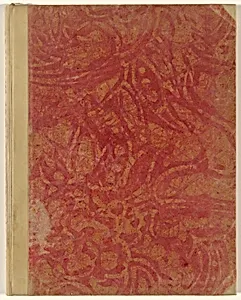
Medium
bound volume with 12 lithographs and one relief print on laid JW Zanders paper
Dimensions
book: 25.8 × 20.4 × 1 cm (10 3/16 × 8 1/16 × 3/8 in.)
Classification
Volume
Department
CG-W
Museum
National Gallery of Art, Washington, D.C.
Credit
Gift of Ruth Cole Kainen
Accession Number
2012.92.623.1-13
Rights
Public Domain
Art Historical Context
**Der Mantel (The Coat)**, created by German Expressionist artist Walter Gramatté in 1919, is a captivating bound volume comprising 12 lithographs and one relief print on high-quality laid JW Zanders paper. Measuring a compact 25.8 × 20.4 × 1 cm, this intimate artist's book invites close contemplation, its pages unfolding a narrative centered on the enigmatic theme of a coat. Gramatté, known for his mystical and emotive imagery, produced this work amid the cultural ferment of post-World War I Germany, a time when Expressionism flourished as artists channeled inner turmoil and spiritual quests through distorted forms and bold contrasts. Lithography, Gramatté's primary technique here, allowed for rich tonal depth and intricate details drawn directly on stone, while the single relief print—likely a woodcut—adds textural contrast, emphasizing the era's innovative printmaking revival. Zanders paper, a premium German laid stock, enhances the prints' velvety surface and archival longevity, underscoring the work's status as a collector's gem. Housed in the National Gallery of Art as a gift from Ruth Cole Kainen (Department CG-W), *Der Mantel* exemplifies early 20th-century experimentation with the book format, blending fine art with the accessibility of multiples. This piece not only showcases Gramatté's haunting style but also reflects the Weimar Republic's artistic vitality, offering visitors a portal to Expressionism's emotional intensity.
About the Artist
Walter Gramatté · 1897–1929
Walter Gramatté, born Walter Eduard Gramatté on January 8, 1897, in Berlin-Wedding to building manager Otto Gramatté and his wife Katharina, emerged as a poignant voice in German Expressionism despite a tragically brief career. The son of modest parents—described variably as a baker in some accounts—Gramatté volunteered for World War I in 1914 but was largely spared frontline duty due to chronic p...