
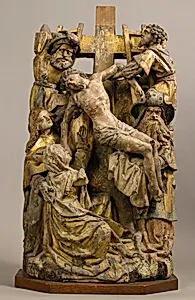
Descent from the Cross
Unknown Artist
late 15th century
Medium
Oak with polychromy and gilding
Dimensions
Overall (with base): 28 5/8 x 15 1/2 x 6 1/2 in. (72.7 x 39.4 x 16.5 cm) Overall (without base): 27 1/2 x 14 3/4 x 5 3/4 in. (69.9 x 37.5 x 14.6 cm)
Classification
Sculpture-Wood
Culture
South Netherlandish
Department
Medieval Art
Museum
Metropolitan Museum of Art, New York, NY
Credit
Gift of J. Pierpont Morgan, 1916
Accession Number
16.32.216a, b
Rights
Public Domain
Tags
Art Historical Context
This poignant *Descent from the Cross*, in the late 15th century by an unknown South Netherlandish, captures a pivotal moment from Christ's Passion: the careful lowering of Jesus's body from the cross by figures including Joseph of Arimathea, Nicodemus, and the Virgin Mary. Standing about 28 inches tall including its base, this oak sculpture exemplifies the emotional intensity of Northern European religious art during the transition from the Middle Ages to the Renaissance Such scenes were central to late medieval devotion, inviting worshippers to meditate on Christ's suffering and humanity. Crafted from durable oak and enhanced with vibrant polychromy—layers of painted colors—and shimmering gilding, the work originally would have glowed with lifelike realism in a church or private chapel. The South Netherlandish style favored expressive gestures and naturalistic drapery, heightening the pathos of the mourners' sorrow. These techniques not only preserved the wood but also elevated the spiritual experience, making divine narratives feel intimately human. A generous gift from J. Pierpont Morgan in 1916, this sculpture now graces the Metropolitan Museum of Art's Medieval Art collection, offering visitors a window into the devotional fervor of 15th-century Flanders.