
Design for a Bed Alcove in Empire Style
ca. 1805–10
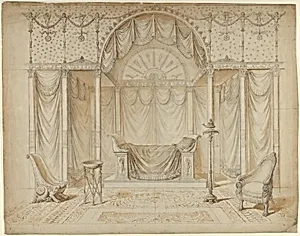
Medium
Pen and brown ink, brush and brown and blue wash, over graphite (recto); graphite (verso)
Dimensions
18 11/16 x 23 15/16 in. (47.4 x 60.8 cm)
Classification
Drawings
Department
Drawings and Prints
Museum
Metropolitan Museum of Art, New York, NY
Credit
The Elisha Whittelsey Collection, The Elisha Whittelsey Fund, 1953
Accession Number
53.670.46
Rights
Public Domain
Tags
Art Historical Context
Step into the grandeur of Napoleonic France with this anonymous French design for a bed alcove in the Empire style, created around 1805–10. The Empire style, championed during Napoleon Bonaparte's reign, drew from ancient Roman and Egyptian motifs to symbolize imperial power and luxury. This drawing captures the era's love for symmetrical, monumental furniture integrated into architectural spaces, transforming bedrooms into regal retreats. Bed alcoves like this one were fashionable in elite homes, offering privacy and drama with draped canopies, ornate chairs, and bold proportions. Rendered in pen and brown ink with brush and brown and blue washes over graphite on the recto (and graphite sketches on the verso), the work showcases the precision of 19th-century architectural drafting. These mixed-media techniques allowed artists to convey texture, depth, and color subtly—browns evoking rich woods and upholstery, blues hinting at silks or skies—making it a practical blueprint for craftsmen. Such preparatory drawings were essential for high-end interiors, blending functionality with artistic flair. Housed in the Metropolitan Museum of Art's Drawings and Prints department (The Elisha Whittelsey Collection, 1953), this piece offers a window into how Empire opulence shaped everyday elite life, influencing furniture design across Europe. Imagine retiring to such splendor—timeless elegance in every line!
About the Artist
Anonymous, French, 19th century · 1800–1900
**Anonymous, French, 19th Century (ca. 1800–1900)** The artist cataloged as Anonymous, French, 19th century embodies the enigmatic yet essential contributions of unidentified creators to France's vibrant 19th-century art world. Active roughly between 1800 and 1900, this figure—or potentially collective workshop—produced a diverse array of works amid the nation's transition from Neoclassicism thro...