
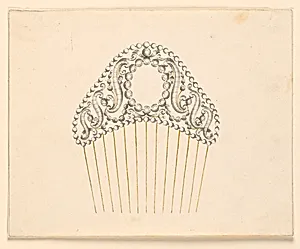
Design for a Comb
early 19th century
Medium
jewelry
Classification
jewelry
Department
Smithsonian Collection
Museum
Smithsonian American Art Museum
Credit
Museum purchase through gift of various donors and from Eleanor G. Hewitt Fund
Accession Number
1938-88-764
Rights
Public Domain
About this artwork
Research in Progress
Art Historical Context
This delicate *Design for a Comb* from the early 19th century offers a glimpse into the elegant world of American jewelry design. Housed in the Smithsonian American Art Museum's collection, this artwork—acquired through museum purchase with gifts from various donors and the Eleanor G. Hewitt Fund—remains a subject of ongoing research, highlighting the mysteries still surrounding many historical artifacts. As a preparatory sketch or pattern, it captures the refined aesthetic preferences of the era, when combs served as both functional hair accessories and symbols of femininity and status. In the early 1800s, amid the Federal period's neoclassical influences, such designs reflected a growing American interest in personal adornment inspired by European fashions. Combs, often crafted from materials like tortoiseshell, gold, or ivory, were essential for elaborate hairstyles at social events. This unknown artist's work underscores the collaborative process between designers and jewelers, blending practicality with ornamental flair—a testament to the burgeoning craft traditions in a young nation. Though details are emerging through research, the piece invites us to appreciate the artistry behind everyday luxury, reminding visitors of how jewelry bridged fashion, culture, and craftsmanship in 19th-century America.
About the Artist
Unknown
The artist designated as "Unknown" in our virtual museum's collection exemplifies a poignant chapter in art history: creators whose identities have faded into obscurity despite the enduring power of their work. With only one known artwork attributed to them in our holdings, this figure represents countless anonymous hands that shaped visual culture across centuries. Museums worldwide, including th...