
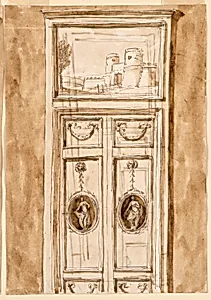
Design for a Door and Overdoor
1780–1790
Classification
architecture
Department
Smithsonian Collection
Museum
Smithsonian American Art Museum
Credit
Museum purchase through gift of various donors and from Eleanor G. Hewitt Fund
Accession Number
1938-88-1660
Rights
Public Domain
About this artwork
Research in Progress
Art Historical Context
This elegant design by Italian architect Giuseppe Barberi (1746–1809) offers a window into late-18th-century architectural planning. Created around 1780–1790, it depicts a door and its overdoor—the decorative panel above the doorway—that would have formed a striking focal point in a grand interior. Classified as architecture, the work reflects the era’s emphasis on harmonious, ornamental spaces that blended function with visual splendor. In 18th-century Italy, such designs were essential for architects collaborating with wealthy patrons on palaces and public buildings. Doors and overdoors often featured sculpted, painted, or stucco elements inspired by classical antiquity, marking a shift toward Neoclassical restraint after the exuberance of the Baroque. Barberi’s drawing captures this transitional moment, when interiors served as stages for displaying cultural refinement and status. Though the specific medium is unknown, the piece highlights the importance of preparatory sketches in realizing architectural visions. It invites viewers to imagine the completed doorway in an opulent setting, underscoring how these designs shaped the built environment of the time and continue to inform our appreciation of historical interiors.