
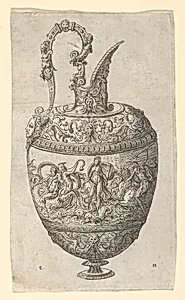
Design for a Ewer
1565
Medium
Etching
Dimensions
Sheet: 5 11/16 × 3 3/8 in. (14.5 × 8.5 cm)
Classification
Prints|Ornament & Architecture
Department
Drawings and Prints
Museum
Metropolitan Museum of Art, New York, NY
Credit
Anonymous Gift, in memory of Walter E. Stait, 2013
Accession Number
2013.978.3
Rights
Public Domain
Tags
Art Historical Context
Step into the intricate world of 16th Renaissance design with *Design for a Ewer an etching by Flemish artist Erasmus Hornick from 1565. This delicate print, measuring just 5 11/16 × 3 3/8 inches, served as a model for silversmiths and goldsmiths crafting elegant pitchers known as ewers. Hornick, renowned for his ornamental engravings, captures the era's fascination with classical mythology, prominently featuring Venus amid scrolling motifs that blend grace and exuberance. Etching, a relatively new technique in the mid-1500s, allowed Hornick to achieve fine, fluid lines ideal for architectural and decorative patterns. Classified under Prints: Ornament & Architecture, this work exemplifies the Northern Renaissance trend of producing pattern books—affordable prints that disseminated sophisticated designs across workshops in Antwerp and beyond. Ewers like this one were status symbols for the elite, often used in lavish dining rituals. Today, housed in the Metropolitan Museum of Art's Drawings and Prints department (thanks to an anonymous gift in memory of Walter E. Stait), it offers a window into how artists fueled the decorative arts revolution, merging beauty, utility, and ancient gods in everyday luxury. A testament to Hornick's precision, it's a tiny treasure of historical craftsmanship.