
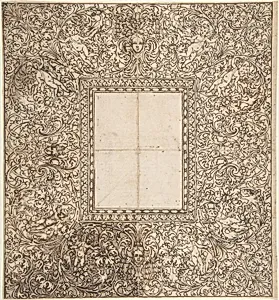
Design for a frame with foliates and putti
17th century
Medium
Pen and brown ink
Dimensions
Sheet: 7 9/16 x 6 15/16 in. (19.2 x 17.7 cm)
Classification
Drawings|Ornament & Architecture
Department
Drawings and Prints
Museum
Metropolitan Museum of Art, New York, NY
Credit
The Elisha Whittelsey Collection, The Elisha Whittelsey Fund, 1960
Accession Number
60.576.18
Rights
Public Domain
Tags
Art Historical Context
In the opulent world of 17th-century German Baroque art, this anonymous drawing—*Design for a Frame with Foliates and Putti*—es as a delicate blueprint for grandeur. Craft with pen and brown ink on modest sheet measuring 7 9/16 x 6 15/16 inches, it depicts swirling foliate motifs intertwined with playful putti, those chubby, winged cherubs symbolizing joy and divine mischief. Such designs were essential preparatory works for ornate picture frames, mirrors, or architectural elements, transforming everyday objects into lavish statements of wealth and piety. The use of pen and brown ink highlights the artist's mastery of line work, allowing for intricate, fluid details that evoke movement and abundance—hallmarks of Baroque ornamentation. In Germany during this era, amid the Counter-Reformation and rising princely courts, these motifs drew from classical antiquity and Renaissance precedents, blending natural forms with fantastical figures to inspire carved wood or gilded frames. Housed in the Metropolitan Museum of Art's Drawings and Prints department, this piece from The Elisha Whittelsey Collection offers a glimpse into the unseen labor behind Baroque splendor. It reminds us how even the humblest sketch could frame masterpieces, bridging architecture, decoration, and devotion in an age of exuberant excess.