
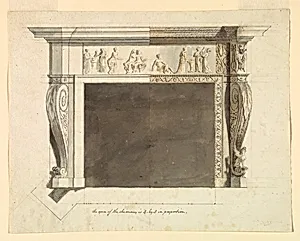
Design for a Mantelpiece
ca. 1765
Classification
furniture
Department
Smithsonian Collection
Museum
Smithsonian American Art Museum
Credit
Museum purchase through gift of various donors and from Eleanor G. Hewitt Fund
Accession Number
1938-88-5294
Rights
Public Domain
About this artwork
Research in Progress
Art Historical Context
Robert Adam's *Design for a Mantelpiece*ca. 1765) exemplifies the elegant neoclassical style that defined British and interiors during the 18 century. As a leading figure of the Adam style—a refined synthesis of ancient Roman motifs Palladian symmetry, and delicate ornamentationAdam revolutionized domestic design. This drawing, likely a sketch for a chimneiece, captures his signature approach: graceful proportions, intricate motifs like urns, garlands, and swags, and a harmonious of functionality with opulence. Created at the peak of Adam's, when he and his brothers were grand country houses like Syon House and Osterley, this mantelpiece design reflects the era's fascination with antiquity revived through the Grand Tour. Mantelpieces were focal points in Georgian salons, symbolizing wealth and sophistication. Adam's innovations made them lighter and more sculptural than the heavy Baroque predecessors, influencing furniture and decorative arts across Europe and America. Housed in the Smithsonian American Art Museum's collection, this piece highlights Adam's enduring legacy in bridging architecture and furnishings. Though research continues, it invites us to imagine the flickering firelight dancing across its carved details, evoking the refined world of 18th-century aristocracy.