
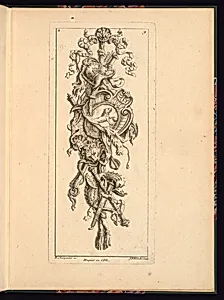
Design for a Pendant Trophy
Medium
Classification
Department
Smithsonian Collection
Museum
Smithsonian American Art Museum
Credit
Purchased for the Museum by the Advisory Council
Accession Number
1921-6-519-17
Rights
Public Domain
About this artwork
Research in Progress
Art Historical Context
**Design for a Pendant Trophy by René CharpentierFrench, 1680–1723) is a delicate print from the mid-18th century (1738–61), likely a posthumous edition of the engraver's original design. Charpentier, a master of ornamental prints during the late Baroque era, specialized in intricate motifs that bridged the grandeur of Louis XIV's court with emerging Rococo elegance. This work exemplifies his skill in capturing lavish decorative elements, such as trophies—symbolic assemblages of emblems like laurels, armor, or musical instruments—intended for pendants, those exquisite hanging jewels favored by European aristocracy. As a print medium, it served a practical purpose: disseminating high-fashion designs to goldsmiths, jewelers, and artisans across Europe, making elite ornamentation accessible for replication in silver, gold, or enamel. The trophy motif evoked triumph and prestige, reflecting the era's fascination with opulence and symbolism amid France's cultural dominance. Housed in the Smithsonian American Art Museum's collection—purchased by the Advisory Council—this piece highlights transatlantic appreciation for French decorative arts. Though research continues, this print invites us to admire Charpentier's precise linework and imaginative flair, a window into 18th-century luxury and craftsmanship. (198 words)