
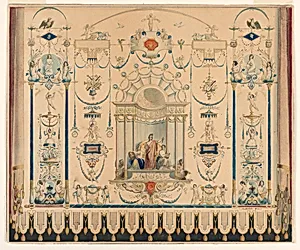
Design for a Theater Curtain
mid-19th century
Classification
theater
Department
Smithsonian Collection
Museum
Smithsonian American Art Museum
Credit
Gift of Eleanor and Sarah Hewitt
Accession Number
1931-73-276
Rights
Public Domain
About this artwork
Research in Progress
Art Historical Context
### Design for a Theater CurtainStep into the dramatic world of mid-19th-century theater with this intriguing *Design for a Theater Curtain by V. Bertol, an artist active between 1850 1860. Created during a golden age of American and European stagecraft, this piece captures the era's passion for spectacle, when theaters were grand social hubs blending art, architecture, and performance. Bertolotti's likely envisioned a lavish backdrop to unveil plays and operas, reflecting the Romantic emphasis on emotion and grandeur. Though the medium remains unidentified amid ongoing research, such theater designs were vital to the performing arts, often employing bold patterns, rich motifs, and illusionistic effects to transport audiences. In the 1850s, as gas lighting and elaborate scenery revolutionized stages, curtains like this one served as both functional dividers and artistic statements, symbolizing cultural aspirations amid rapid urbanization. Now part of the Smithsonian American Art Museum's collection—thanks to the generous gift of Eleanor and Sarah Hewitt—this work invites us to ponder the unsung designers behind the curtain. As research progresses, it promises deeper insights into 19th-century decorative innovation and theatrical heritage. (198 words)