
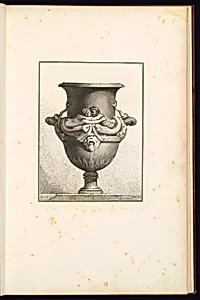
Design for a Vase
Classification
Department
Smithsonian Collection
Museum
Smithsonian American Art Museum
Credit
Purchased for the Museum by the Advisory Council
Accession Number
1921-6-471-31
Rights
Public Domain
About this artwork
Research in Progress
Art Historical Context
Ennemond Alexandre Petitot1727–1801), a prominent French designer and architect, created this *Design for a Vase in 1764, a captivating print now housed in the Smithsonian American Museum. Active during the lavish Rococo era transitioning toward Neoclassicism, Petit was renowned for his intricate ornamental designs, often blending graceful curves with emerging classical motifs. This work exemplifies the preparatory sketches that fueled Europe's decorative arts scene, where architects like him supplied patterns for luxury objects destined for aristocratic homes and royal courts. As a print, the design served a practical yet artistic purpose: disseminating precise motifs to goldsmiths, porcelain makers, and silversmiths across workshops. In 1764, amid France's Enlightenment fervor, such vases symbolized refined taste and technical virtuosity, evoking the opulence of Versailles or the Polish court where Petitot later worked. Though research continues, its acquisition by the Smithsonian's Advisory Council underscores its value in tracing the evolution of European design influences on American collections. Imagine the vase's imagined form—elegant, perhaps adorned with scrolling foliage or mythological figures—bridging art and craft in an age of innovation. This piece invites visitors to appreciate the unseen labor behind 18th-century splendor. (198 words)