
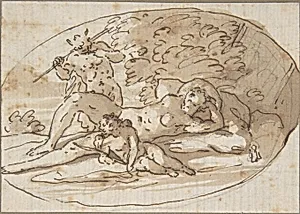
Design for a Vignette with a Nymph Surprised by a Satyr
second half 17th century
Medium
Pen and brown ink, brush and brown wash, graphite
Dimensions
2 5/8 x 4 in. (6.7 x 10.2 cm) - oval shape
Classification
Drawings
Department
Drawings and Prints
Museum
Metropolitan Museum of Art, New York, NY
Credit
Gift of Harry G. Friedman, 1956
Accession Number
56.648.41
Rights
Public Domain
Tags
Art Historical Context
In the lively world of 17th-century French art, this delicate oval drawing captures a classic mythological moment: a nymph startled by a pursuing satyr. Created anonymously in the second half of the using pen and brown ink for precise lines, brush and brown wash soft shading, and graphite for subtle underdrawing, the 2⅝ × 4 in. (6.7 × 10.2 cm) vignette design exemplifies the era's preparatory sketches for prints or book illustrations. These small-scale works were prized for their intricate detail and ability to evoke drama in compact spaces. Mythological themes like nymphs—ethereal nature spirits—and lusty satyrs were hugely popular during France's Baroque period, reflecting a cultural fascination with classical antiquity amid the grandeur of Louis XIV's court. Artists drew inspiration from Ovid's tales, blending sensuality and surprise to explore human desires. The anonymous creator's fluid technique highlights movement and emotion, with the wash adding depth to the figures' dynamic chase, a hallmark of French draftsmanship that influenced engravers and decorative arts. Today, housed in the Metropolitan Museum of Art's Drawings and Prints department (gift of Harry G. Friedman, 1956), this gem offers a window into the creative process behind opulent vignettes that adorned books and furniture, reminding us of art's playful ties to ancient lore.