
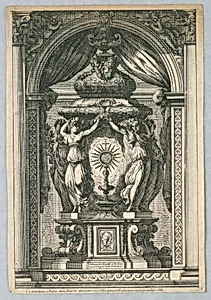
Design for an Altar Tabernacle
Classification
Department
Smithsonian Collection
Museum
Smithsonian American Art Museum
Credit
Purchased for the Museum by the Advisory Council
Accession Number
1921-6-126-2
Rights
Public Domain
About this artwork
Research in Progress
Art Historical Context
**Design for an Altar Tabernacle *Jean Le Pautre,, 1618–1682, 1661* Created in 1661 by the renowned French artist and engraver Jean Leautre, this *Design for an Altar Tab* captures the opulent spirit of the French Baroque era under Louis XIV. Le Pautre, a of ornamental design and printmaking, specialized in intricate architectural motifs that blended classical grandeur with elaborate decoration. Altar tabernacles, ornate enclosures for the Eucharist in Catholic churches, were central to 17th-century ecclesiastical art, symbolizing divine presence through lavish gold, silver, and sculpted details. As a print, this work likely served as a model for artisans, disseminating sophisticated French styles across Europe. Le Pautre's prints were revolutionary for their precision and flair, influencing goldsmiths, sculptors, and architects in creating sumptuous religious furnishings. Produced at the height of absolutist France's cultural flowering, this design reflects the era's emphasis on magnificence and harmony, echoing the grandeur of Versailles. Though research on this specific piece is ongoing, its inclusion in the Smithsonian American Art Museum's collection—purchased by the Advisory Council—highlights its enduring value as a window into Baroque innovation. (178 words)