
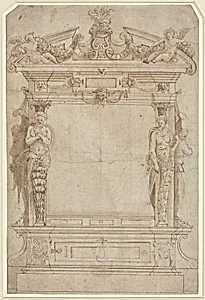
Design for an Architectural Framework
16th century
Medium
pen and brown ink with brown wash over black chalk
Dimensions
overall: 39.5 x 26.2 cm (15 9/16 x 10 5/16 in.)
Classification
Drawing
Department
CG-E
Museum
National Gallery of Art, Washington, D.C.
Credit
Julius S. Held Collection
Accession Number
1985.1.3
Rights
Public Domain
Art Historical Context
This exquisite *Design for an Architectural Framework*, created by an anonymous French artist in the 16th century, offers a glimpse into the Renaissance-era fascination with classical architecture and grand-scale engineering. Dating to a time when France was absorbing Italian Renaissance ideals under kings like Francis I, such drawings served as vital blueprints for temporary festival structures, stage sets, or monumental facades—blending utility with ornate decoration to impress royal courts and public spectacles. Executed in pen and brown ink with brown wash over black chalk on a modest sheet measuring 39.5 x 26.2 cm, the work exemplifies mixed-media techniques popular among 16th-century draftsmen. Black chalk provided loose underdrawing for proportions, while precise ink lines defined details and wash added tonal depth, mimicking stone textures and shadows. This methodical approach highlights the era's shift toward perspective and illusionism, influenced by Vitruvius and emerging Mannerist flourishes. Housed in the National Gallery of Art's Julius S. Held Collection (Department CG-E), this drawing underscores the collaborative world of workshops where architects and artists pooled ideas. It invites us to appreciate the unseen labor behind France's opulent built heritage, reminding visitors how sketches like this bridged imagination and reality.