
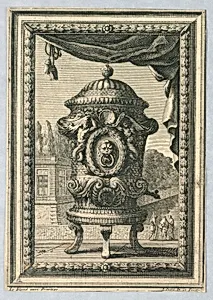
Design for an Urn
Medium
Classification
Department
Smithsonian Collection
Museum
Smithsonian American Art Museum
Credit
Purchased for the Museum by the Advisory Council
Accession Number
1921-6-129-1
Rights
Public Domain
About this artwork
Research in Progress
Art Historical Context
Jean Le Pautre (1618–1682), a prominent French engraver and designer during the Baroque era, created this *Design for an Urn around 1650. in the opulent courtly style of Louis XIV's early reign, Le Paut specialized in intricate ornamental prints that served as blueprints for luxury objects. His designs blended classical motifs with lavish scrolling foliage and fantastical elements, influencing furniture makers, silversmiths, and architects across Europe. As a print, this work exemplifies the revolutionary role of engraving in 17th-century design dissemination. Affordable and reproducible, such plates allowed artisans far from Paris to replicate high-style decoration, fueling the spread of French taste during the Grand Siècle. This urn design likely envisioned a grand vessel for gardens or interiors, adorned with the era's signature exuberance—think swirling acanthus leaves and mythical figures evoking antiquity's splendor. Housed in the Smithsonian American Art Museum's collection, purchased by the Advisory Council, this piece highlights the transatlantic appeal of French decorative arts. Though research continues, it offers a window into how printed designs democratized elegance, bridging royal patronage and everyday craftsmanship.