
Design for andiron
1800–1825
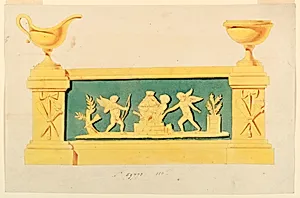
Medium
metalwork
Classification
metalwork
Department
Smithsonian Collection
Museum
Smithsonian American Art Museum
Credit
Gift of Eleanor and Sarah Hewitt
Accession Number
1931-64-161
Rights
Public Domain
About this artwork
Research in Progress
Art Historical Context
This elegant *Design for Andiron* from the Lefebvre Manufactory in Tai, Belgium (ca. 1800–1825), offers a glimpse into early th-century metalwork craftsmanship. Andirons, or fire dogs, were essential hearth accessories in grand homes, propping logs while serving as decorative focal points. Crafted during the Napoleonic era's transition to Romanticism, this design reflects Tournai's reputation for fine metal production, blending functionality with ornate detailing suited to Neoclassical interiors. The Lefebvre Manufactory specialized in high-quality metal objects, exporting to elite markets across Europe. Though research on this piece is ongoing, its survival as a preparatory design highlights the meticulous planning behind functional art—likely sketched or modeled to guide casting in bronze or iron. Such items symbolized wealth and refinement, warming both body and ambiance in pre-central-heating households. Generously gifted to the Smithsonian American Art Museum by collectors Eleanor and Sarah Hewitt, this work enriches our understanding of transatlantic design influences, bridging European workshops with American collections. A testament to everyday luxury, it invites visitors to imagine flickering firesides of yesteryear.