
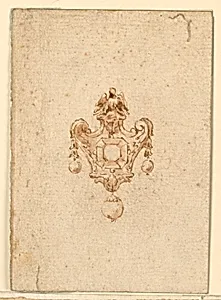
Design for Brooch with Volutes and Eagle
16th century
Classification
jewelry
Department
Smithsonian Collection
Museum
Smithsonian American Art Museum
Credit
Museum purchase through gift of various donors and from Eleanor G. Hewitt Fund
Accession Number
1938-88-780
Rights
Public Domain
About this artwork
Research in Progress
Art Historical Context
Step into the Renaissance world with *Design for Brooch withutes and Eagle*, a 16th-century sketch from the Smithsonian American Art Museum's collection. This intricate jewelry design showcases volutes—elegant, swirling scroll motifs borrowed from classical architecture like Ionic columns—and a majestic eagle, evoking symbols of strength and imperial power seen in ancient Roman art. Though the artist remains unknown and research is ongoing, it hints at the era's revival of antiquity, where jewelers blended ornate patterns with heraldic emblems to create wearable treasures. Crafted as a preparatory drawing for a brooch, this piece reflects the meticulous techniques of Renaissance goldsmiths and designers, who often sketched concepts before crafting in precious metals and gems. Such designs were prized by nobility, serving as both fashion statements and status symbols during a time of exploration and artistic flourishing across Europe. Acquired through museum purchase with gifts from donors and the Eleanor G. Hewitt Fund, it underscores the Smithsonian's commitment to preserving these glimpses of historical craftsmanship. While details like the exact medium await further study, this brooch design invites us to imagine it adorning a velvet gown at a royal court, bridging the gap between sketch and splendor. A true gem of jewelry history!
About the Artist
Unknown
The artist designated as "Unknown" in our virtual museum's collection exemplifies a poignant chapter in art history: creators whose identities have faded into obscurity despite the enduring power of their work. With only one known artwork attributed to them in our holdings, this figure represents countless anonymous hands that shaped visual culture across centuries. Museums worldwide, including th...