
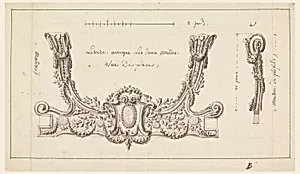
Design for Carriage Understructure
Classification
transportation
Department
Smithsonian Collection
Museum
Smithsonian American Art Museum
Credit
Purchased for the Museum by the Advisory Council
Accession Number
1911-28-190
Rights
Public Domain
About this artwork
Research in Progress
Art Historical Context
Step into the elegant world of 18th transportation with *Design for Carriage Under* by Richard de Lalonde, a designer active from 1780 to 1796. Created in 1780, this artwork captures the intricate engineering behind luxurious horse-drawn carriages, which were not just vehicles but symbols of social status and refined craftsmanship during France's Ancien Régime. Acquired by the Smithsonian American Art Museum through the Advisory, it now resides in the Smithsonian Collection, classified under transportation—a testament to how design bridged art and functionality. Though the medium remains unidentified amid ongoing research, the piece likely represents a technical drawing or blueprint, showcasing de Lalonde's expertise in vehicular architecture. In an era when carriages evolved from bulky coaches to sleeker, more aerodynamic forms, such understructures were crucial for balance, speed, and comfort on cobblestone streets. This design reflects the neoclassical precision of late 18th-century French innovation, just before the French Revolution disrupted aristocratic excesses. Today, it invites us to appreciate the unsung artistry of mobility's foundations—where every beam and joint blended aesthetics with engineering. A hidden gem for history buffs, it highlights how everyday transport fueled cultural splendor. (198 words)