
Design for Ceiling Decoration
1746–1809
Medium
interiors
Classification
interiors
Department
Smithsonian Collection
Museum
Smithsonian American Art Museum
Credit
Museum purchase through gift of various donors and from Eleanor G. Hewitt Fund
Accession Number
1938-88-1518
Rights
Public Domain
About this artwork
Research in Progress
Art Historical Context
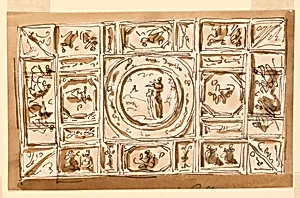
**Design for Ceiling Decoration** by Giuseppe Barberi (, 1746–1809) captures the elegance of late 18th Italian interior design. As a Roman architect and designer, Barberi contributed to the Neoclassical, drawing inspiration from ancient Roman motifs to create harmonious, refined spaces for palaces and villas. This preparatory work, classified as an interior design, likely served as a blueprint for ornate ceiling treatments—a hallmark of grand European architecture during the Enlightenment era, where ceilings unified rooms through illusionistic patterns, stucco work, and symbolic embellishments. Ceiling designs like Barberi's were pivotal in transforming interiors into immersive environments, emphasizing proportion, symmetry, and light to evoke antiquity's splendor. They reflected a cultural shift toward rational beauty amid Italy's vibrant architectural scene, blending functionality with artistic ambition. Though detailed research on this specific piece is ongoing, it highlights Barberi's skill in conceptualizing spaces that balanced opulence and restraint. Acquired by the Smithsonian American Art Museum through generous donors and the Eleanor G. Hewitt Fund, this artifact bridges European design traditions with American collections. Visitors can appreciate how such visions brought timeless grandeur to everyday elegance. (198 words)