
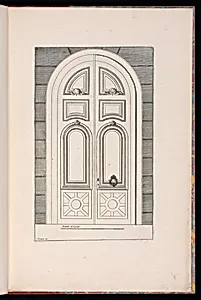
Design for Doors for a Porte Cochère
1680-1718
Medium
Classification
Department
Smithsonian Collection
Museum
Smithsonian American Art Museum
Credit
Purchased for the Museum by the Advisory Council
Accession Number
1921-6-415-5
Rights
Public Domain
About this artwork
Research in Progress
Art Historical Context
**Design for Doors for a Porte Cochère** by Louis Crép y (French, 1680?–1760) is a delicate print from the late 17th to early 18th century, capturing the ornate elegance of French architectural design. A *porte cochère*—a grand, covered entranceway for carriages—was a hallmark of aristocratic estates during the reign of Louis XIV, symbolizing wealth and hospitality. Crép y's design likely showcases intricate ironwork or decorative panels suited for such opulent gateways, reflecting the era's fusion of functionality and lavish ornamentation. As a print, this work served a practical purpose in the dissemination of architectural ideas. In an age before digital blueprints, engraved designs like this allowed artisans, architects, and builders across Europe to replicate sophisticated motifs, bridging the gap between royal commissions and wider adoption. Crép y, active during the transition from Baroque grandeur to emerging Rococo lightness, contributed to this vibrant tradition of ornamental printmaking. Housed in the Smithsonian American Art Museum's Print Collection—purchased by the Advisory Council—this piece invites ongoing research into its precise techniques and provenance. It offers visitors a window into the craftsmanship that adorned France's châteaux, reminding us how printed designs shaped the built environment of the Ancien Régime. (198 words)