
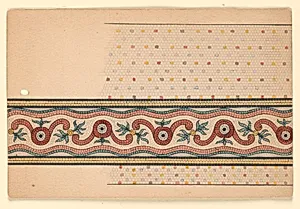
Design for Mosaic Floor
Classification
tiles
Department
Smithsonian Collection
Museum
Smithsonian American Art Museum
Credit
Gift of Theodore A. Krieg
Accession Number
1984-125-81
Rights
Public Domain
About this artwork
Research in Progress
Art Historical Context
**Design for Mosaic Floor** Frederick Krieg (1852–1932), a German-born American artist, dates to around 1900 and resides in the Smithsonian American Art's collection, gifted by Theodore A. Krieg. preparatory design reflects the era's fascination with ornate interior decoration, as America embraced European influences during the Gilded Age's transition to the Progressive Era. Krieg, who immigrated from Germany, brought Old World craftsmanship to his adopted homeland, channeling skills honed in a tradition of meticulous tilework. Classified among tiles, the work outlines a mosaic floor pattern—likely intended for grand homes, public spaces, or ecclesiastical settings. Mosaic floors, pieced from colorful, durable fragments, symbolized luxury and permanence, blending artistry with functionality. Though the exact medium remains unknown and research is ongoing, this design highlights Krieg's role in America's burgeoning decorative arts scene, where such patterns evoked opulence amid rapid urbanization. As part of the Smithsonian's holdings, it offers a glimpse into early 20th-century design innovation, bridging immigrant ingenuity with American ambition. Visitors might imagine these motifs gracing bustling city halls or elegant parlors, enduring underfoot as silent storytellers of their time.