
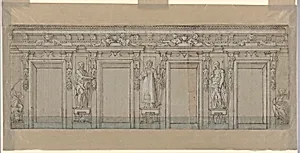
Design for One Floor of a Painted Facade
Classification
architecture
Department
Smithsonian Collection
Museum
Smithsonian American Art Museum
Credit
Museum purchase from the Mary Hearn Greims Fund
Accession Number
1940-21-44
Rights
Public Domain
About this artwork
Research in Progress
Art Historical Context
Lazzaro Tavarone, an artist active from 1556 to 1641, created this *Design for One Floor of a Painted Facade* between 1580 and 1610. Housed in the Smithsonian American Art Museum's architecture collection, this preparatory work reflects the ingenuity of late Renaissance Italy, where architects and painters collaborated to transform ordinary buildings into visual spectacles. Tavarone based in Lucca, was known for his contributions to facade designs that blurred the line between painting and architecture. Painted facades were a hallmark of the period, using illusionistic techniques to mimic stonework, columns, or sculptures on flat surfaces—a clever, cost-effective way to add grandeur to urban palaces and churches. This design for a single floor likely served as a blueprint for such trompe-l'oeil effects, showcasing Tavarone's skill in planning layered, decorative elements that would fool the eye from street level. Though the medium remains unidentified and research is ongoing, it exemplifies how drawings like this guided artisans in creating vibrant streetscapes. Acquired through the Mary Hearn Greims Fund, this piece invites us to imagine the lively facades of 16th-century Tuscany, where art elevated everyday architecture into a feast for the senses. A testament to Italian design innovation, it reminds visitors of the era's playful fusion of art and illusion.