
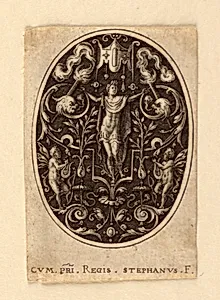
Design for Ornament: Apollo
Classification
ornament
Department
Smithsonian Collection
Museum
Smithsonian American Art Museum
Credit
Museum purchase through gift of Mrs. John Innes Kane
Accession Number
1942-36-27-1
Rights
Public Domain
About this artwork
Research in Progress
Art Historical Context
**Design for Ornament Apollo** *Etienne Delaune (French, 1519–1583), ca. 1580* Step into the elegant world of Renaissance ornamentation with Etienne Delaune's *Design for Ornament Apollo*, a captivating preparatory work from around 1580. Delaune, a masterful French goldsmith, engr, and designer, was renowned for his intricate patterns that adorned jewelry, metalwork, and decorative objects. This piece, classified as an ornament in the Smithsonian American Art Museum's collectionmuseum purchase through the gift of Mrs. John Innes Kane), likely served as a blueprint for luxurious craftsmanship, evoking the grandeur of classical mythology through the figure of Apollo, god of music, poetry, and light. Created during France's Mannerist period—a stylish bridge between High Renaissance harmony and emerging Baroque exuberance—Delaune's design reflects the era's fascination with antiquity. Artists like him drew from Greco-Roman motifs to elevate everyday luxury, blending fluid lines, strapwork, and mythological elegance. Though the medium remains under research, such designs were typically etched or drawn for replication in precious metals, underscoring the Renaissance ideal of *virtù*: skill uniting beauty and ingenuity. Today, this work highlights the Smithsonian's commitment to preserving European decorative arts, offering a window into 16th-century courtly tastes where Apollo symbolized enlightenment amid religious wars and royal patronage. A testament to Delaune's enduring influence on design history! (198 words)