
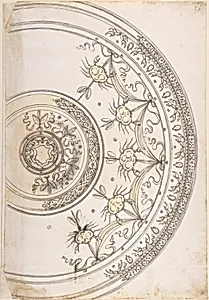
Design for Silver Plate Decorated with Crabs
16th century
Medium
Pen and black ink, brush and gray and yellow wash
Dimensions
16 7/16 x 11 3/16 in. (41.7 x 28.4 cm)
Classification
Drawings
Department
Drawings and Prints
Museum
Metropolitan Museum of Art, New York, NY
Credit
Rogers Fund, by exchange, 1958
Accession Number
58.525.4
Rights
Public Domain
Tags
Art Historical Context
In the 16th century, Flemish artist Erasmus Hornick crafted this intricate *Design for Silver Plate Decor with Crabs*, a drawing that captures the Renaissance passion for ornate metalwork. Created with pen and black ink for precise, enhanced by brush-applied gray and yellow washes suggest the gleam of silver and subtle tonality, the sheet measures impressive 16 716 x 11 /16 inches. Hornick, part of Antwerp's vibrant design scene, specialized in such ornamental patterns, blending natural motifs like crabs and scrolling leaves into fantastical compositions ideal for luxury tableware. This drawing exemplifies the Northern Renaissance's fusion of artistry and craftsmanship, where designs like this guided goldsmiths in fashioning elaborate platters for Europe's elite. Crabs—evoking the sea's bounty and perhaps symbolizing tenacity—intertwine with foliage in a Mannerist style, emphasizing asymmetry and exuberant detail. Such works highlight the era's cultural prestige of silver services, status symbols at banquets that showcased technical virtuosity and whimsy. Today, housed in the Metropolitan Museum of Art's Drawings and Prints department (acquired via the Rogers Fund in 1958), it invites us to appreciate the hidden labor behind Renaissance splendor—where a simple sketch promised feasts fit for kings.