
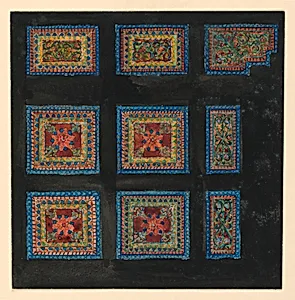
Design for Stained Glass Ornamental Panels
1890–1900
Medium
architecture, interiors
Classification
architecture, interiors
Department
Smithsonian Collection
Museum
Smithsonian American Art Museum
Credit
Smithsonian American Art Museum
Accession Number
1961-10-25
Rights
Public Domain
About this artwork
Research in Progress
Art Historical Context
John La Farge (1835–1910), a pioneering American artist, created this *Design for Stained Glassnamental Panels* between 1890 and 1900. Renowned for revitalizing stained glass in the States, La Farge drew inspiration from medieval traditions, Japanese aesthetics, and the Pre-Rhaelites, blending them into luminous, innovative designs. This work, classified under architecture and interiors, reflects the late 19th-century Aesthetic Movement's emphasis on beauty in everyday spaces, where decorative arts elevated and public buildings. As a preparatory design, it likely served as a blueprint for opalescent stained glass panels—La Farge's signature technique involving layered, iridescent glass to capture shifting light effects. These ornamental elements were prized for transforming interiors into jewel-like environments, symbolizing America's Gilded Age opulence and growing appreciation for integrated architectural ornament. Housed in the Smithsonian American Art Museum's collection, the piece underscores La Farge's influence on American decorative arts during a period of rapid industrialization and cultural refinement. Though research continues, this design invites us to imagine its vibrant realization, highlighting how art bridged utility and splendor in turn-of-the-century America.