
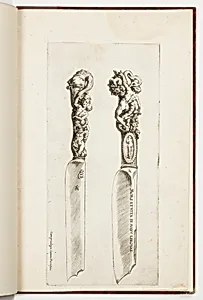
Design for Two Knife Handles
Classification
cutlery
Department
Smithsonian Collection
Museum
Smithsonian American Art Museum
Credit
Purchased for the Museum by the Advisory Council
Accession Number
1921-6-350-1
Rights
Public Domain
About this artwork
Research in Progress
Art Historical Context
Francesco Salviati (1510–1563), a leading Mannerist artist from Renaissance Florence and Rome, created this *Design for Two Knife Handles around 1583—likely a posthumous attribution or workshop production reflecting his enduring influence. Salviati, known for his elegant frescoes and intricate decorative schemes in palaces like the Palazzo Farnese, extended his virtuosity to functional objects, opulent motifs with graceful proportions typical of Mannerism's stylized elegance. As a preparatory drawing (medium unknown), this piece exemplifies the Renaissance fascination with *disegno*—the intellectual primacy of design—where artists sketched elaborate patterns for goldsmiths and silversmiths to execute in precious metals. Knife handles, often status symbols for the elite, featured grotesque figures, strapwork, or floral arabesques, showcasing Salviati's flair for dynamic, elongated forms that bridged painting and applied arts. Housed in the Smithsonian American Art Museum's collection (purchased by the Advisory Council), this artifact highlights the cross-cultural exchange of Italian design ideas, even in an American context today. Ongoing research promises deeper insights into its techniques and provenance, inviting us to appreciate how everyday cutlery became a canvas for artistic innovation.