
Design Wall Elevation with Stucco and Painted Decorations
1708
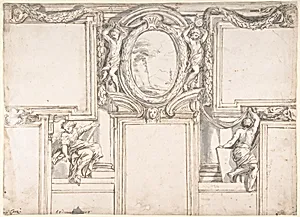
Medium
Pen and brown ink, brush and gray wash
Dimensions
11-1/4 x 15 in. (28.6 x 38.1 cm)
Classification
Drawings|Ornament & Architecture
Department
Drawings and Prints
Museum
Metropolitan Museum of Art, New York, NY
Credit
Gift of Mr. and Mrs. Charles Wrightsman, 1970
Accession Number
1970.736.49
Rights
Public Domain
Tags
Art Historical Context
Created in 1708 by Luigi Gar, a prominent Italian artist of the late Baroque period, this intricate drawing presents a wall elevation design adorned with stucco reliefs painted decorations. Garzi, known for his work in Rome architecture with elaborate ornamentation, envisioned a grand interior surface alive with scrolling motifs, architectural niches, and graceful human figures—likely allegorical or decorative putti. The composition exemplifies the Baroque emphasis on movement, drama, and illusionistic depth, transforming flat walls into dynamic, theatrical spaces. Executed in pen and brown ink with brush and gray wash on paper (11-1/4 x 15 in.), the medium allows Garzi to deftly convey texture and light. Fine ink lines delineate precise stucco moldings and foliage, while subtle gray washes add volumetric shading, mimicking the play of light on sculpted surfaces. Such preparatory drawings were essential for coordinating artisans in opulent palaces and churches, bridging design intent with execution. Housed in the Metropolitan Museum of Art's Drawings and Prints department as a gift from Mr. and Mrs. Charles Wrightsman in 1970, this work offers a window into early 18th-century Italian decorative arts. It highlights the era's cultural splendor, where architecture, sculpture, and painting merged to inspire awe, reflecting the grandeur of papal Rome.
About the Artist
Luigi Garzi · 1638–1721
Italian painter. Comment on works: Religious