
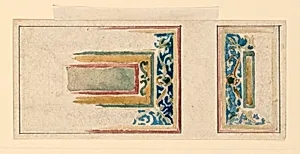
Designs for Two Decorative Panels
1890–1900
Classification
architecture, interiors
Department
Smithsonian Collection
Museum
Smithsonian American Art Museum
Credit
Smithsonian American Art Museum
Accession Number
1961-10-24
Rights
Public Domain
About this artwork
Research in Progress
Art Historical Context
John La Farge (1835–1910) was a trailblazing American artist renowned for his innovative contributions to decorative arts, particularly in the late 19th century. *Designs for Two Decor Panels* (ca. 1890–1900), held in the Smithsonian American Art's collection, exemplifies his vision for enhancing architectural interiors. Created during the Gilded Age period of opulent American design influenced by the Aesthetic Movement—these preparatory sketches likely envisioned ornate panels to adorn public buildings, homes, or churches, blending artistry with functionality. La Farge's often pushed boundaries in color, light, and texture, drawing from his experiments with stained glass and murals. Though the medium here remains unidentified amid ongoing research, the classification under architecture and interiors underscores his role in the American Renaissance, where artists elevated everyday spaces into artistic statements. These designs reflect a cultural shift toward lavish, nature-inspired ornamentation amid rapid industrialization. As studies continue, these panels offer a window into La Farge's enduring legacy, inviting us to appreciate how his ideas transformed American interiors into vibrant, harmonious environments. (178 words)