
Dice
Unknown Artist
9th–10th century
Medium
Bone; incised and inlaid with paint
Dimensions
H. 3/8 in. (1 cm) W. 3/8 in. (1 cm) D. 3/8 in. (1 cm)
Classification
Gaming pieces
Department
Islamic Art
Museum
Metropolitan Museum of Art, New York, NY
Credit
Rogers Fund, 1948
Accession Number
48.101.211d
Rights
Public Domain
Tags
Art Historical Context
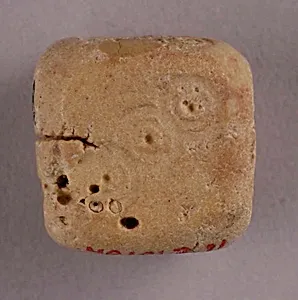
Nestled in the Metropolitan Museum of Art's Islamic Art collection, this diminutive bone die, crafted by an unknown artist in the 9th–10th, offers a glimpse into the leisurely pastimes of medieval Islamic society. Measuring just 3/8 inch (1 cm) on each side, it's a perfect cube, incised with markings and inlaid with paint to denote its numerical values—likely the familiar pips from 1 to 6. Acquired through the Rogers Fund in 8, this gaming piece evokes the tactile world of games like backgammon, which were immensely popular across the Abbasid Caliphate and beyond. Bone was a practical, abundant medium for such everyday objects, prized for its durability and workability. The artisan's technique—precise incising to create recesses, followed by colorful paint inlays—demonstrates skilled craftsmanship typical of the period, where even utilitarian items bore traces of artistry. These dice highlight the cultural blend of recreation and ingenuity in Islamic urban centers like Baghdad or Cordoba, where gaming fostered social bonds despite religious cautions against gambling. Though small, this die underscores the richness of Islamic material culture, reminding us that history's stories often hide in humble artifacts. Visitors might ponder: what chances did it roll in hands long gone?