
Die Klostersuppe
1838
Medium
Öl auf Holz
Dimensions
85,5 × 130 cm
Classification
Gemälde
Department
Belvedere Collection
Museum
Belvedere
Credit
Belvedere, Vienna
Accession Number
2088
Rights
Public Domain
About this artwork
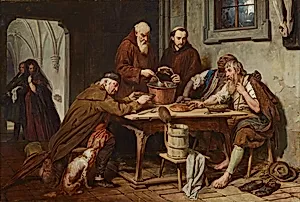
Es ist die Fortsetzung eines „Romans in Bildern“. Danhauser hatte ihn zwei Jahre zuvor in seinem Gemälde Der reiche Prasser begonnen. Er, der im noblen Salon einem Bettler nicht einmal die Brotkrumen vom reich gedeckten Tisch gegönnt hatte, sitzt nun selbst bei der Armenspeisung. Ihm gegenüber: sein ehemaliger Diener und der missachtete Bettler. Mürrisch schaut der Prasser auf seinen Hund, der an bessere Zeiten erinnert. Weder die Mönche, die die Suppe verteilen, noch den Bettler, der ihm wohlwo...
Art Historical Context
Josef Danhauser’s *Die Klostersuppe* (1838) the artist’s “novel in pictures” begun two years earlier with *Der reiche Prasser*. The once-prosperous man who refused a beggar even a few crumbs now sits among the poor, receiving soup from monks in a monastery refectory. Across from him are the very servant he dismissed and the beggar he once scorned; the former master stares sullenly at his dog, the last reminder of his lost comforts, while pointedly ignoring both the charitable monks and the beggar who kindly offers him bread. Painted in oil on wood and now in the Belvedere Collection in Vienna, the work delivers a clear moral lesson without inviting pity. Danhauser shows that the man’s downfall stems entirely from his own earlier callousness. The composition keeps the viewer’s attention on this reversal of fortune, underscoring the consequences of indifference to others. The painting’s straightforward narrative style and measured tone reflect the Biedermeier era’s interest in everyday moral tales. Its measured size and detailed execution make the scene immediately legible, inviting visitors to reflect on the enduring relevance of its message about compassion and personal responsibility.