
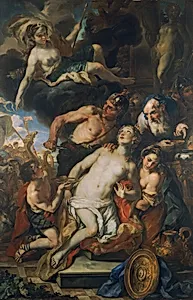
Die Opferung Iphigeniens
1690/1691
Medium
Öl auf Leinwand
Dimensions
205 x 135 cm
Classification
Gemälde
Department
Belvedere Collection
Museum
Belvedere
Credit
Belvedere, Vienna
Accession Number
4242
Rights
Public Domain
About this artwork
Iphigenie hat sich nichts zuschulden kommen lassen und soll dennoch getötet werden. Sie ist das Opfer ihres Vaters Agamemnon, der die Jagdgöttin Artemis durch das Blut seiner Erstgeborenen beschwichtigen will. Aus Mitleid verhindert Artemis selbst die grausame Tat und entführt Iphigenie nach Tauris, wo diese der Göttin fortan als Priesterin dient. Für seine dramatische Bilderzählung wählt Rottmayr den zentralen Handlungsmoment. Eben erst war der Künstler aus Venedig zurückgekehrt. Dort hatte er ...
Art Historical Context
### Die Opferung Iphigeniens (The Sacrifice of Iphigenia) Johann Michael Rottmayr's *Die Opferung Iphigeniens*, painted around 1690/1691, captures a pivotal moment from Greek mythology. Iphigenia, innocent daughter of Agamemnon, faces sacrifice to appease the huntress goddess Artemis, angered by the king's slaying of her sacred deer. As the drama unfolds, Artemis intervenes out of pity, sparing Iphigenia and whisking her away to Tauris to serve as her priestess. This oil-on-canvas masterpiece (205 x 135 cm) freezes the tension at its height, drawing viewers into the emotional turmoil of fate, divine mercy, and human tragedy. Fresh from 13 years in Venice, Rottmayr infused his work with the vibrant techniques of Baroque painting he mastered there—rich colors, dynamic compositions, and sensory exuberance. In Austria, his canvas stands as a prime example of Baroque splendor, blending dramatic narrative with dazzling light and shadow to evoke awe and empathy. The large-scale format amplifies its theatrical impact, ideal for grand ecclesiastical or courtly settings. Housed in Vienna's Belvedere Collection, this painting highlights Rottmayr's role in importing Venetian opulence to Central Europe, making the ancient myth vividly alive for 18th-century audiences and today's visitors alike.