
Dirk
Unknown Artist
late 17th century
Medium
Steel, horn
Dimensions
L. 12 7/8 in. (32.7 cm); W. 1 1/2 in. (3.8 cm); Wt. 5.7 oz. (161.6 g)
Classification
Knives
Culture
possibly Portuguese
Department
Arms and Armor
Museum
Metropolitan Museum of Art, New York, NY
Credit
Gift of Rutherfurd Stuyvesant, 1893
Accession Number
93.13.74
Rights
Public Domain
Art Historical Context
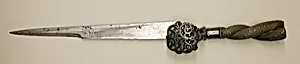
Step into the Metropolitan Museum of Art's Arms and Armor collection with this elegant late 17th-century dirk, a thrusting dagger measuring 12⅞ inches in length. Crafted from steel with a horn handle, its slender blade (1½ inches wide) and lightweight design (just 5.7 ounces) made it ideal for close-quarters combat or utility tasks. Possibly of Portuguese origin, it reflects the Iberian Peninsula's renowned metalworking traditions during an era of global exploration and naval power. Dirks like this were versatile sidearms for sailors, soldiers, or civilians amid Europe's Age of Sail, when Portugal's vast empire demanded reliable personal weapons. The steel blade showcases skilled forging techniques for sharpness and durability, while the horn grip—smooth and ergonomic—highlights practical artistry in organic materials, balancing form and function without ornate decoration. A generous gift from Rutherfurd Stuyvesant in 1893, this anonymous masterpiece invites us to ponder the lives of those who wielded it, from Lisbon docks to distant colonies, embodying the gritty elegance of 17th-century martial culture.