
Dirk with Sheath
Unknown Artist
early 19th century
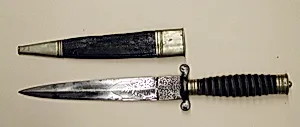
Medium
Steel, horn, brass, leather, copper wire
Dimensions
L. with sheath 11 1/4 in. (28.6 cm); L. without sheath 10 5/8 in. (27 cm); W. 1 7/8 in. (4.8 cm); Wt. 5.5 oz. (155.9 g); Wt. of sheath 1 oz. (28.3 g)
Classification
Knives
Culture
possibly Spanish
Department
Arms and Armor
Museum
Metropolitan Museum of Art, New York, NY
Credit
Gift of Rutherfurd Stuyvesant, 1891
Accession Number
91.16.91a, b
Rights
Public Domain
Art Historical Context
This elegant "Dirk with Sheath dating to the early 19 century, exemplifies the fine craftsmanship of edged weapons from the Arms and Armor collection at The Metropolitan Museum of Art Measuring just over 11 inches long with sheath, the dagger features a steel blade for durability and sharpness, paired with a handle likely of horn for a secure grip. Brass accents, leather sheath, and copper wire bindings add both functionality and subtle ornamentation, creating a balanced tool weighing a mere 5.5 ounces without its 1-ounce scabbard. Possibly of Spanish origin, this dirk reflects the utilitarian yet artful design of personal knives during a period of global exploration and conflict, when such weapons served for self-defense, utility, or ceremony. Spanish bladesmiths were renowned for their metallurgical expertise, blending practicality with aesthetic restraint—evident here in the harmonious materials that prioritize form and balance. A gift to the Met from Rutherfurd Stuyvesant in 1891, this anonymous masterpiece invites us to ponder the lives of its unknown makers and owners, bridging everyday history with museum splendor. Visitors, imagine drawing it swiftly from its leather home—a testament to human ingenuity in steel and horn.