
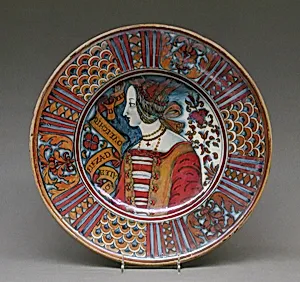
Dish
Unknown Artist
19th century
Medium
Tin-glazed earthenware, lustered
Dimensions
Overall (confirmed): 2 7/8 × 16 1/4 in. (7.3 × 41.3 cm)
Classification
Ceramics-Pottery
Culture
Italian, Deruta
Department
European Sculpture and Decorative Arts
Museum
Metropolitan Museum of Art, New York, NY
Credit
Gift of V. Everit Macy, in memory of his wife, Edith Carpenter Macy, 1927
Accession Number
27.97.34
Rights
Public Domain
Tags
Art Historical Context
This elegant 19th-century dishails from Deruta, Italy—a town renowned for its centuries-old tradition of maiolica pottery. Produced in the heart of Umbria, Deruta's workshops specialized in tin-glazed earthenware, technique that yields a brilliant, glossy surface ideal for vibrant decorations. Measuring just under 3 inches high and over 16 inches long, oval dish exemplifies the utilitarian yet artistic ceramics made for dining or display in Italian households. The medium's hallmark is its tin glaze, which creates an opaque white ground perfect for bold polychrome painting, enhanced here by lustered accents that shimmer with metallic iridescence—a coveted effect borrowed from Islamic ceramics and perfected in Renaissance Italy. Delicate profiles of women amid blooming flowers adorn its surface, evoking classical motifs and the floral exuberance typical of Deruta's output. These designs not only celebrate beauty and femininity but also reflect the era's Romantic fascination with nature and the human form. Now in The Metropolitan Museum of Art's European Sculpture and Decorative Arts collection—gifted in 1927 in memory of Edith Carpenter Macy—this dish offers a window into Italy's enduring ceramic legacy, blending everyday function with artistic splendor. Visitors will appreciate its tactile allure and the masterful luster that catches the light just so.