
Dish
ca. 1760
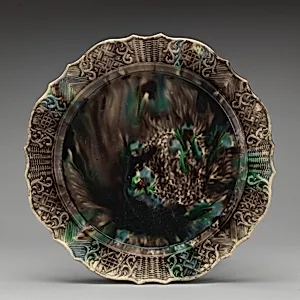
Medium
Lead-glazed earthenware
Dimensions
Diameter: 14 1/2 in. (36.8 cm)
Classification
Ceramics-Pottery
Culture
British, Staffordshire
Department
European Sculpture and Decorative Arts
Museum
Metropolitan Museum of Art, New York, NY
Credit
Gift of Mrs. Russell S. Carter, 1944
Accession Number
44.39.24
Rights
Public Domain
Art Historical Context
This elegant dish, exemplifying the "Whield type," hails from Staffordshire, Britain, around 1760. Crafted lead-glazed earthenware it measures a generous 14½ inches in diameter, making it a substantial serving piece for the era's dining tables. The lead glaze—a hallmark technique—provided a glossy, durable finish that enhanced both functionality and visual appeal, transforming everyday pottery into desirable decorative art. Thomas Whield, a pioneering Staffordshire potter, popularized these vibrant, often mottled glazes in the mid-18th century, blending earthy tones with splashes of color reminiscent of tortoiseshell. Produced at the height of Britain's ceramic boom, such wares reflected growing middle-class tastes for affordable yet stylish tableware, bridging utilitarian craft and emerging industrial production. Staffordshire factories like Whieldon's led innovations that influenced global ceramics. Today, housed in the Metropolitan Museum of Art's European Sculpture and Decorative Arts Department (gift of Mrs. Russell S. Carter, 1944), this dish offers a tangible glimpse into Georgian domestic life, showcasing the artistry and entrepreneurship that made British pottery a worldwide export powerhouse.
About the Artist
Whieldon type
Whieldon-type is not a single artist but a catalogue attribution used by museums for unmarked mid-18th-century Staffordshire earthenware in the manner of Thomas Whieldon (1719-1795), the celebrated English potter of Fenton Vivian. Whieldon perfected lead-glazed cream-colored earthenware streaked and dappled with metallic oxides - manganese browns, copper greens, cobalt blues - producing the mottle...