
Dish
ca. 1725–32
Medium
Hard-paste porcelain
Dimensions
Overall: 1 3/4 × 3 × 4 in. (4.4 × 7.6 × 10.2 cm)
Classification
Ceramics-Porcelain
Culture
German, Meissen with German, Kronstadt decoration
Department
European Sculpture and Decorative Arts
Museum
Metropolitan Museum of Art, New York, NY
Credit
Gift of R. Thornton Wilson, in memory of Florence Ellsworth Wilson, 1950
Accession Number
50.211.25
Rights
Public Domain
Art Historical Context
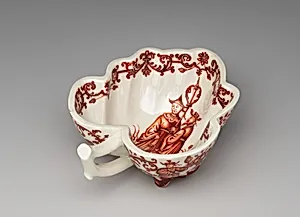
This delicate dish, crafted by the renowned Meissen Manufactory 1725–32 and painted by Ignaz Preiss, exemplifies the dawn of Europe's porcelain revolution. Meissen, founded in 1710 near Dresden, Germany, was first to successfully produce hard-paste porcelain durable, translucent material long monopolized by China. This breakthrough fueled the Rococo era's obsession with luxury tableware, transforming everyday objects into status symbols for Europe's aristocracy. Measuring just 1¾ × 3 × 4 inches, dish features vibrant overglaze enameling from Kronstadt workshops, depicting birds amid blooming flowers—a popular motif blending European naturalism with subtle chinoiserie influences. Preissler's skilled handiwork highlights the technical mastery of firing porcelain at high temperatures to achieve jewel-like colors that wouldn't fade. Such pieces were prized in grand dining sets, showcasing wealth and refined taste. Today, housed in the Metropolitan Museum of Art's European Sculpture and Decorative Arts collection (gift of R. Thornton Wilson, 1950), this dish invites us to marvel at 18th-century innovation, where chemistry met artistry to rival Eastern imports.
About the Artist
Ignaz Preissler|Meissen Manufactory · 1676–1741
German, Friedrichswald 1676–1741Kronsstadt