
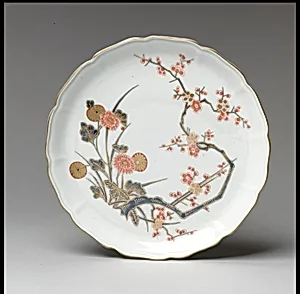
Dish
ca. 1765 (?)
Medium
Hard-paste porcelain
Dimensions
Diameter: 8 3/8 in. (21.3 cm)
Classification
Ceramics-Porcelain
Culture
Austrian, Vienna
Department
European Sculpture and Decorative Arts
Museum
Metropolitan Museum of Art, New York, NY
Credit
The Hans Syz Collection, Gift of Stephan B. Syz and John D. Syz, 1995
Accession Number
1995.268.108
Rights
Public Domain
Tags
Art Historical Context
This elegant dish, crafted by the Imperial Porcelainufactory in Vienna around 1765, exemplifies pinnacle of 18th-century European porcelain. Produced during the height of the Austrian Enlightenment under Empress Maria Theresa, who elevated the manufactory to imperial status in 1744, it reflects Vienna's ambition to rival renowned centers like Meissen and Svres. Measuring just over 8 inches in diameter this hard-paste porcelain piece was designed for both practical table use and display, showcasing the era's blend of functionality and opulence. Hard-paste porcelain, made from kaolin clay and fired at high temperatures, was a technological triumph for European makers, achieving the translucency and durability long prized in Chinese imports. The Vienna manufactory excelled in this medium, often decorating pieces with vibrant floral motifs—evident here from the flower's tag—painted in overglaze enamels and fired to a glossy sheen. These naturalistic blooms captured the Rococo taste for delicate, nature-inspired elegance before transitioning to Neoclassicism. Housed in The Metropolitan Museum of Art's European Sculpture and Decorative Arts department as part of The Hans Syz Collection, this dish offers a window into Habsburg court culture, where porcelain symbolized refinement and imperial prestige. Visitors will appreciate its subtle glow and intricate craftsmanship, a testament to the skilled hands behind Vienna's golden age of ceramics.
About the Artist
Imperial Porcelain Manufactory ( ) · 1744 –1864
Vienna, 1744–1864