
Saucer
Unknown Artist
1725–50
Medium
Hard-paste porcelain
Dimensions
Diameter: 5 9/16 in. (14.1 cm)
Classification
Ceramics-Porcelain-Export
Culture
Japanese, for European market
Department
European Sculpture and Decorative Arts
Museum
Metropolitan Museum of Art, New York, NY
Credit
The Hans Syz Collection, Gift of Stephan B. Syz and John D. Syz, 1995
Accession Number
1995.268.190
Rights
Public Domain
Tags
Art Historical Context
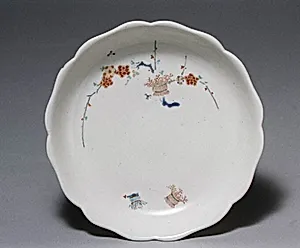
This delicate saucer, crafted in hard-paste porcelain 1725 and 1750, exemplifies Japan's vibrant export porcelain trade during the Edo period. Produced for the European market, it the global exchange of goods and tastes in the early 18th century, Japanese artisans from kilns those in Arita adapted their techniques to appeal to Western collectors. Measuring just 5 9/16 inches in, its petite scale made it ideal for fashionable European tea services, blending functionality with artistry. Hard-paste porcelain, fired at high temperatures for exceptional durability and translucency, was a prized material rivaling Chinese and early Meissen wares. The saucer's surface likely features floral motifs—a hallmark of export ceramics—painted in vibrant enamels overglaze, showcasing masterful underglaze blue and overglaze polychrome techniques. These flowers not only added exotic beauty but symbolized prosperity and nature's abundance, bridging Eastern symbolism with European Rococo preferences. Housed in The Metropolitan Museum of Art's European Sculpture and Decorative Arts department as part of The Hans Syz Collection, this piece highlights how everyday objects became cultural ambassadors, fostering cross-continental appreciation for porcelain's refined elegance.